The center of research leading innovation
in environmental technology—Wintec Glovis
Research Institute creates future environmental technologies.
-
2022. 09. 01. ~ 2023. 08. 31.
2022 R&D Rediscovery Project
Development and commercialization of high-efficiency hollow-fiber pellet-type assembled activated carbon technology
Supporting
AgencyMinistry of Trade, Industry and Energy; Korea Institute for Advancement of Technology.
-
2020. 11. 01. ~ 2021. 10. 31.
Cooperative R&D Program Supporting Leading Research Institutions for SME Support
Development of innovative resource-circulation technology using superheated steam for low-carbon/low-energy consumption
Supporting
AgencyMinistry of SMEs and Startups.
-
2020. 09. 28. ~ 2022. 12. 31.
2020 Green Innovation Company Growth Support Program
Commercialization: Commercialization of a new-concept high-efficiency spent activated carbon regeneration device using superheated steam
R&D: Development of an energy-saving resource-circulation system using superheated steamSupporting
AgencyMinistry of Environment; Korea Environmental Industry & Technology Institute.
-
2019. 09. 01. ~ 2020. 05. 31.
Customized Technology Partner Support Program
Technology development for energy optimization of activated carbon regeneration facilities in drinking-water treatment plants
Supporting
AgencyMinistry of SMEs and Startups.
-
2019. 07. 01. ~ 2020. 12. 31.
Siheung Green Environment Support Center R&D Project
Development of an air-use activated carbon regeneration device using superheated steam for the Sihwa–Banwol Industrial Complex
Supporting
AgencySupporting Agency: Siheung Green Environment Support Center.
-
2018. 03. 01. ~ 2018. 12. 31.
Industry–Academia Joint In-house Research Institute Linkage Follow-up R&D Support Program
Technology development of a superheated-steam irradiation tube applying CFD methods to improve activated carbon regeneration performance
Supporting
AgencyMinistry of Science and ICT; Korea Industrial Technology Association.
-
2017. 06. 30. ~ 2018. 06. 29.
Startup Leap Package Support Program
Water treatment filter with automatic activated carbon regeneration
Supporting
AgencyKorea Institute of Startup & Entrepreneurship Development.
-
2015. 03. 01. ~ 2016. 02. 29.
MOLIT Smart Water Grid Project
Development of intelligent water resource securing technology for linked utilization of water resources in new towns
Supporting
AgencyMinistry of Land, Infrastructure and Transport
-
2013. 04. 26. ~ 2015. 02. 28.
MOLIT Smart Water Grid Project
Development of optimal combined water treatment processes and water-loop linkage technology for new-town Micro Grid for continuous use of water resources
Supporting
AgencyMinistry of Land, Infrastructure and Transport.
-
2014. 05. 22. ~ 2015. 05. 21.
Startup Growth Technology Development Program
Development of a rectangular filtration device combined with activated carbon backwashing and regeneration systems for advanced water purification
Supporting
AgencySmall and Medium Business Administration.
-
2013. 07. 01. ~ 2014. 06. 30.
SME Technology Commercialization Global-up Strategy Support Program
Development and commercialization of high-efficiency hollow-fiber pellet-type assembled activated carbon technology
Supporting
AgencyKorea Institute of Science and Technology Information.
-
2013. 07. 01. ~ 2014. 12. 31.
International Joint Environmental Technology Local Commercialization Support Program
Development of a sectional regeneration filtration system using activated carbon for large-capacity sewage and wastewater treatment
Supporting
AgencyMinistry of Environment; Korea Environmental Industry & Technology Institute.
-
2012. 12. 01. ~ 2013. 11. 30.
Inter-company R&D Joint Planning Consortium Support Program
Consortium for comprehensive reuse of treated sewage and wastewater
Supporting
AgencyKorea Industrial Technology Association.
-
2012. 06. 01. ~ 2013. 05. 31.
Overseas Transfer Technology Development Program
Development of an automatic activated carbon regeneration wastewater/sewage treatment system
Supporting
AgencySmall and Medium Business Administration
Production of New Activated Carbon Material
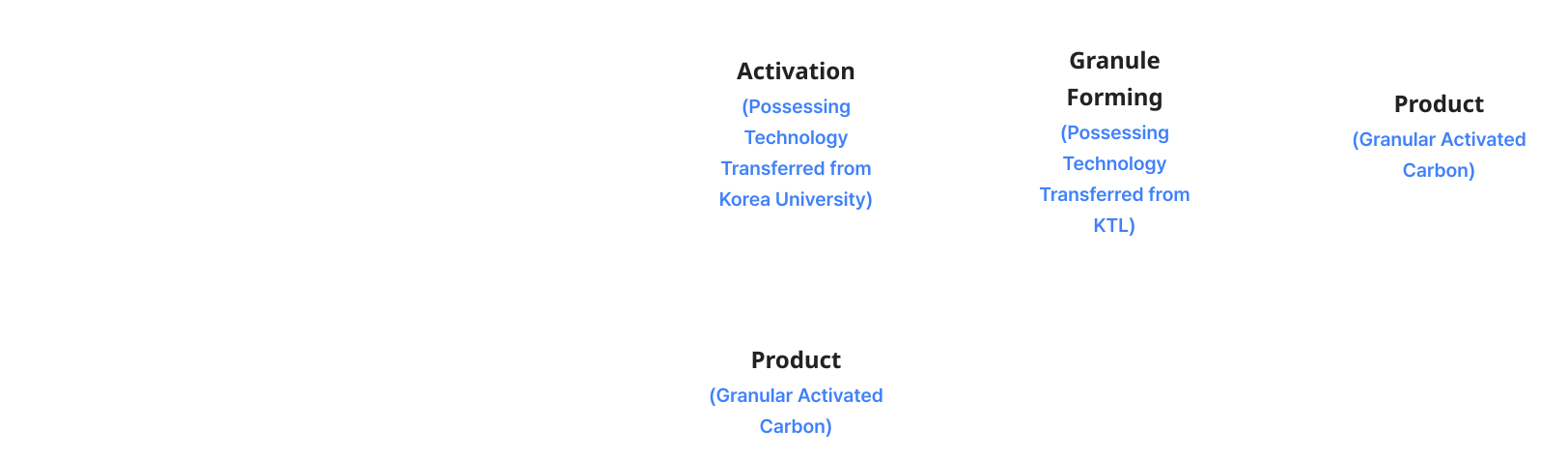
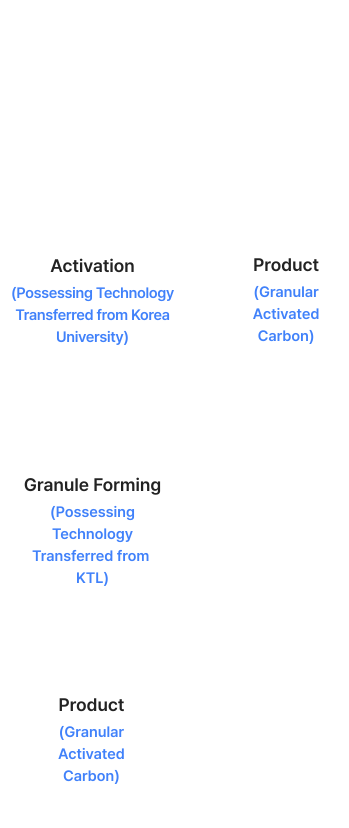
Carbonization and Activation Technology
-
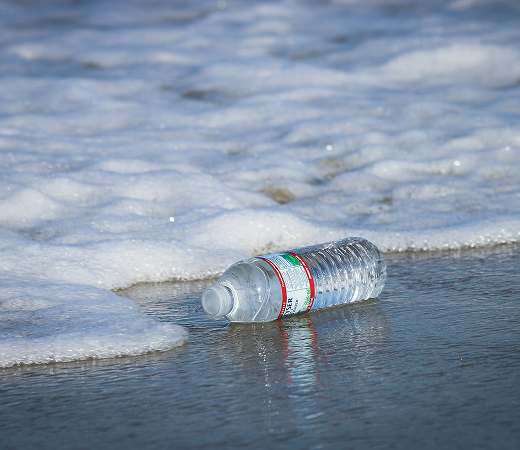
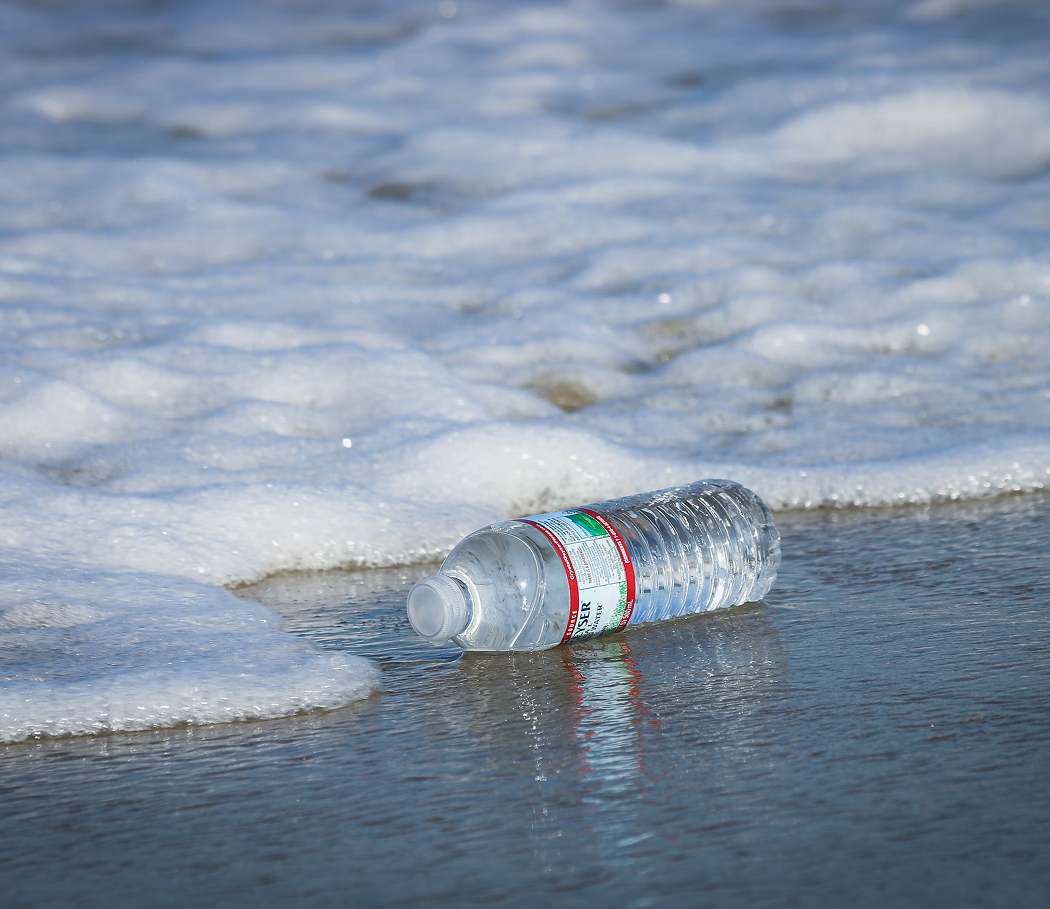
Wasted Plastic
-
Carbonization & Activation
-
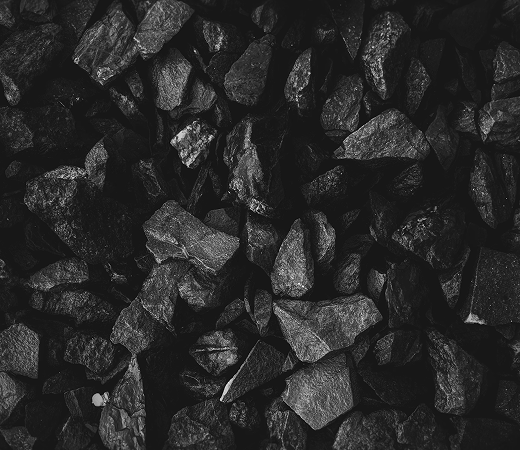
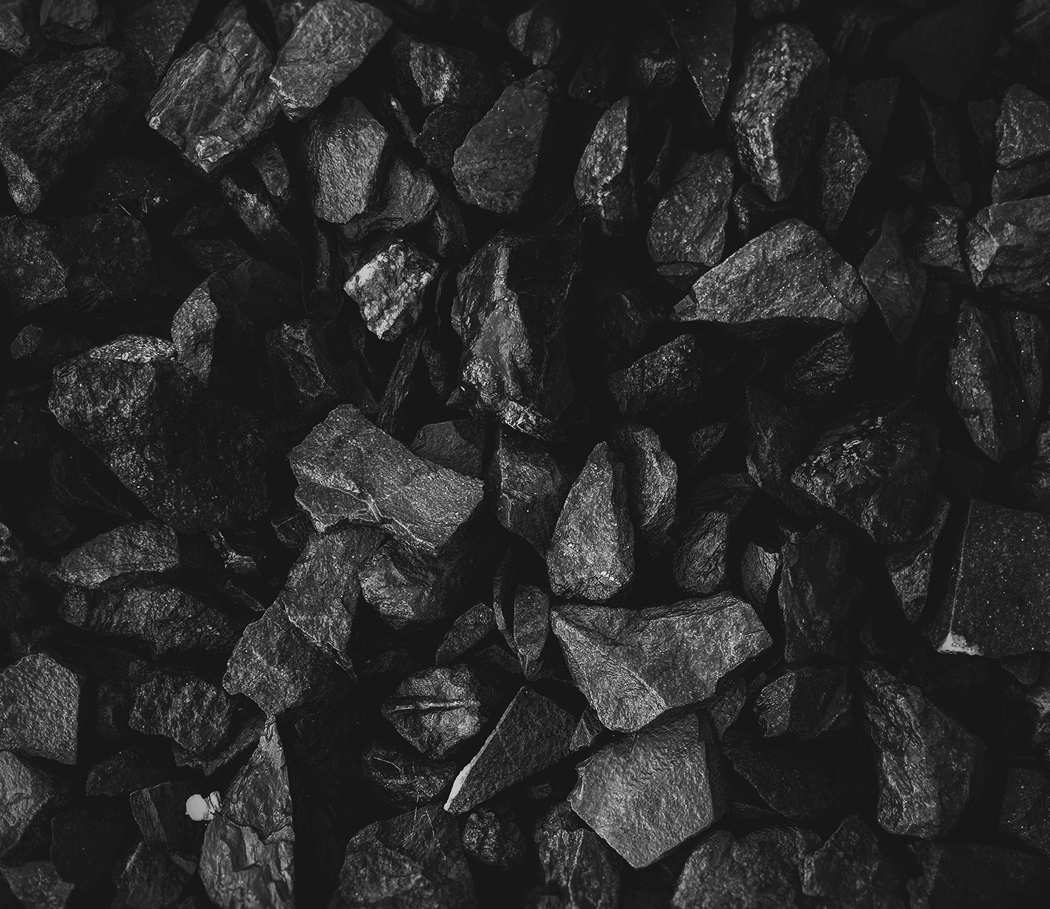
Powdered Activated Carbon
Process
-
1
Carbonization after crushing polyethylene terephthalate (PET) plastic into small pieces
-
2
Mixing carbonized plastic samples with KOH as an activating agent
-
3
Processing the mixture of carbonized plastic samples and KOH at an activation temperature of 700°C for a predetermined time
Through carbonization and activation, well-developed micropores smaller than 2.0 nm are formed
and uniformly distributed
Through carbonization and activation, well-developed micropores smaller than 2.0 nm are formed and uniformly distributed
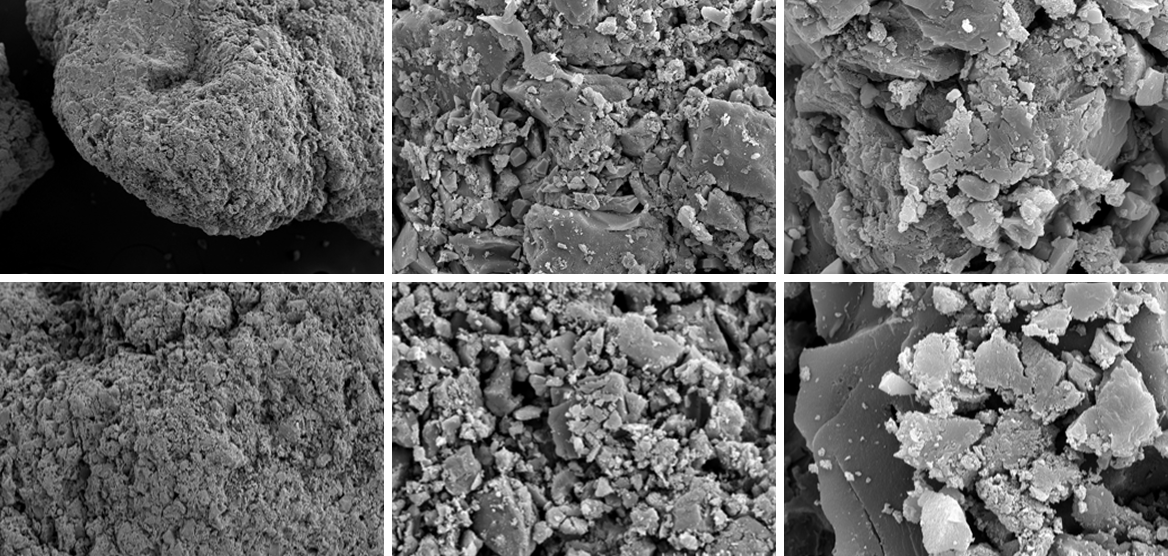
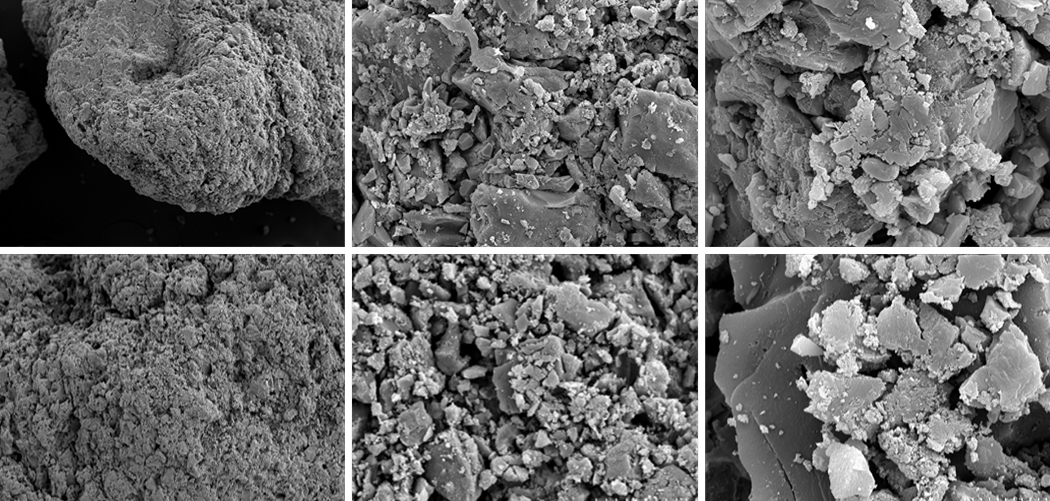
Granulation technology for powdered activated carbon
NIPS (Non-solvent Induced Phase Separation method)
When a polymer (binder) such as plastic is dissolved in a polar organic solvent and then dispersed in a non-solvent (water), the polar organic solvent dissolves into the non-solvent water, causing the organic solvent in the polymer environment to disappear and harden
When a polymer (binder) such as plastic is dissolved in a polar organic solvent and then dispersed in a non-solvent (water), the polar organic solvent dissolves into the non-solvent water, causing the organic solvent in the polymer environment to disappear and harden
-
1
Nitrogen is injected into the internal coagulation bath of the powdered activated carbon + binder mixture for extrusion and transfer
-
2
Solvent is injected into the internal coagulation bath using a syringe pump, discharged into the internal coagulation bath, and non-solvent is introduced
-
3
The organic solvent dissolves into the non-solvent, and when the powdered activated carbon hardens by the binder, granulation and drying proceed
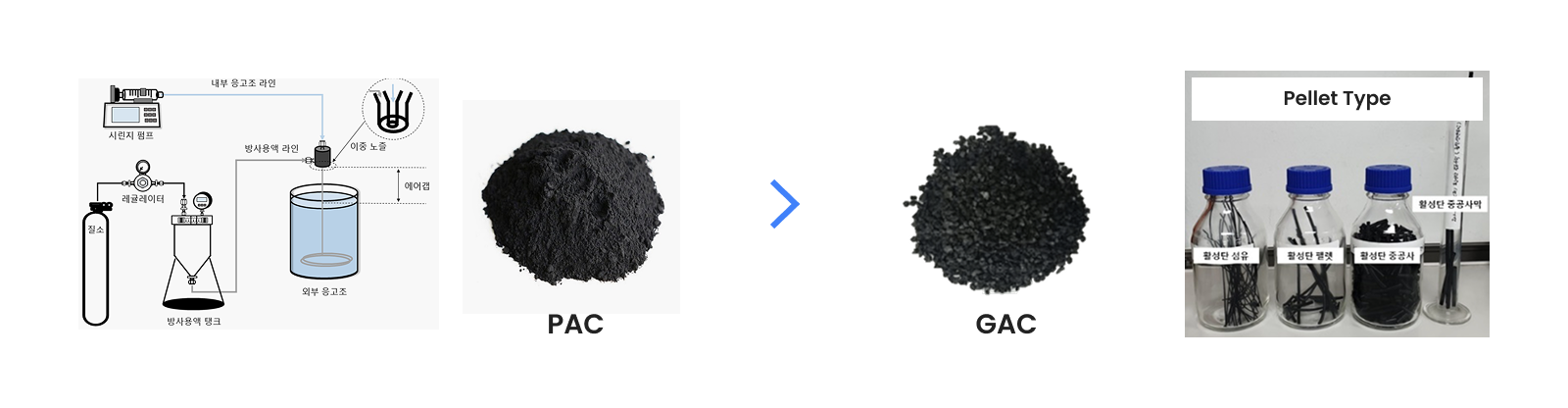
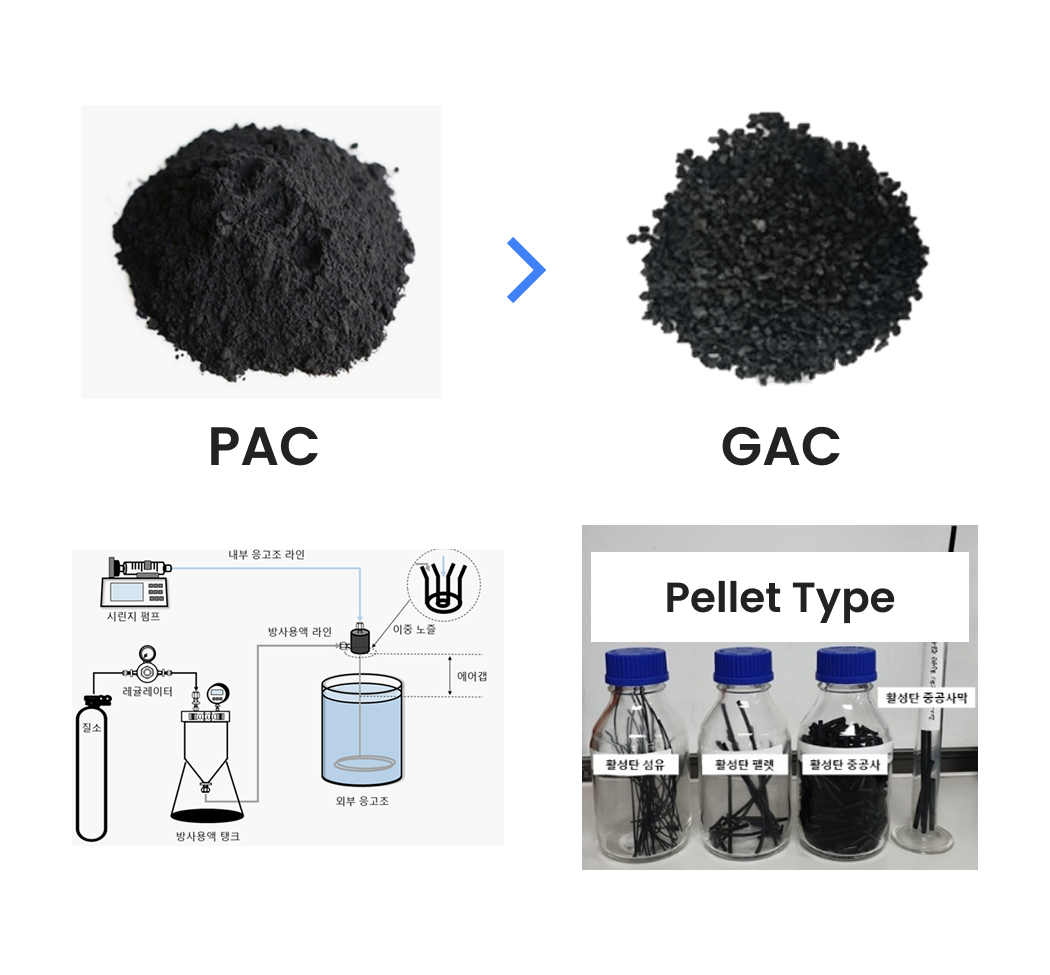
Compared to conventional compression and extrusion forming methods, it is possible to improve the dispersibility of activated carbon → improved mechanical strength, durability, and specific surface area